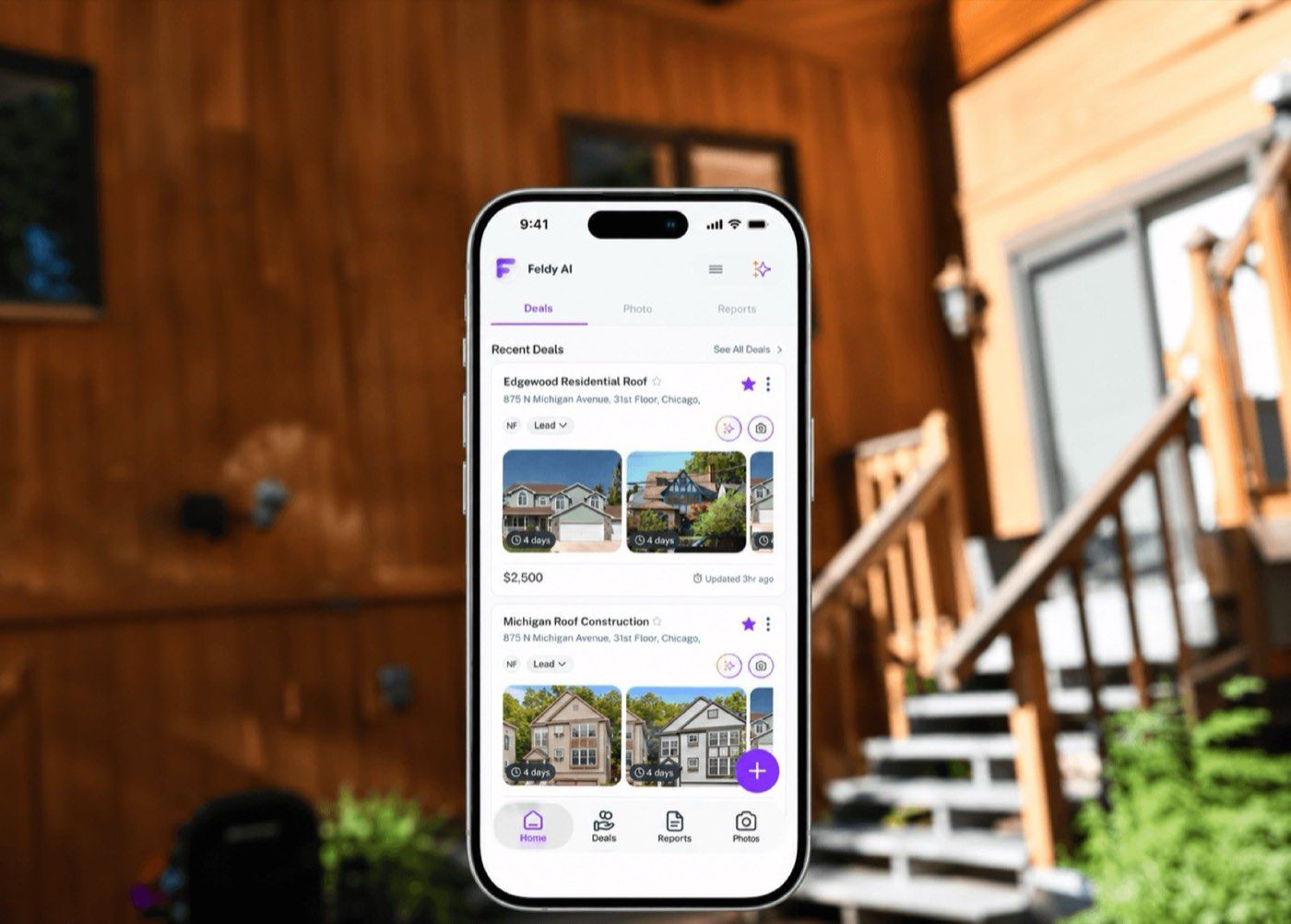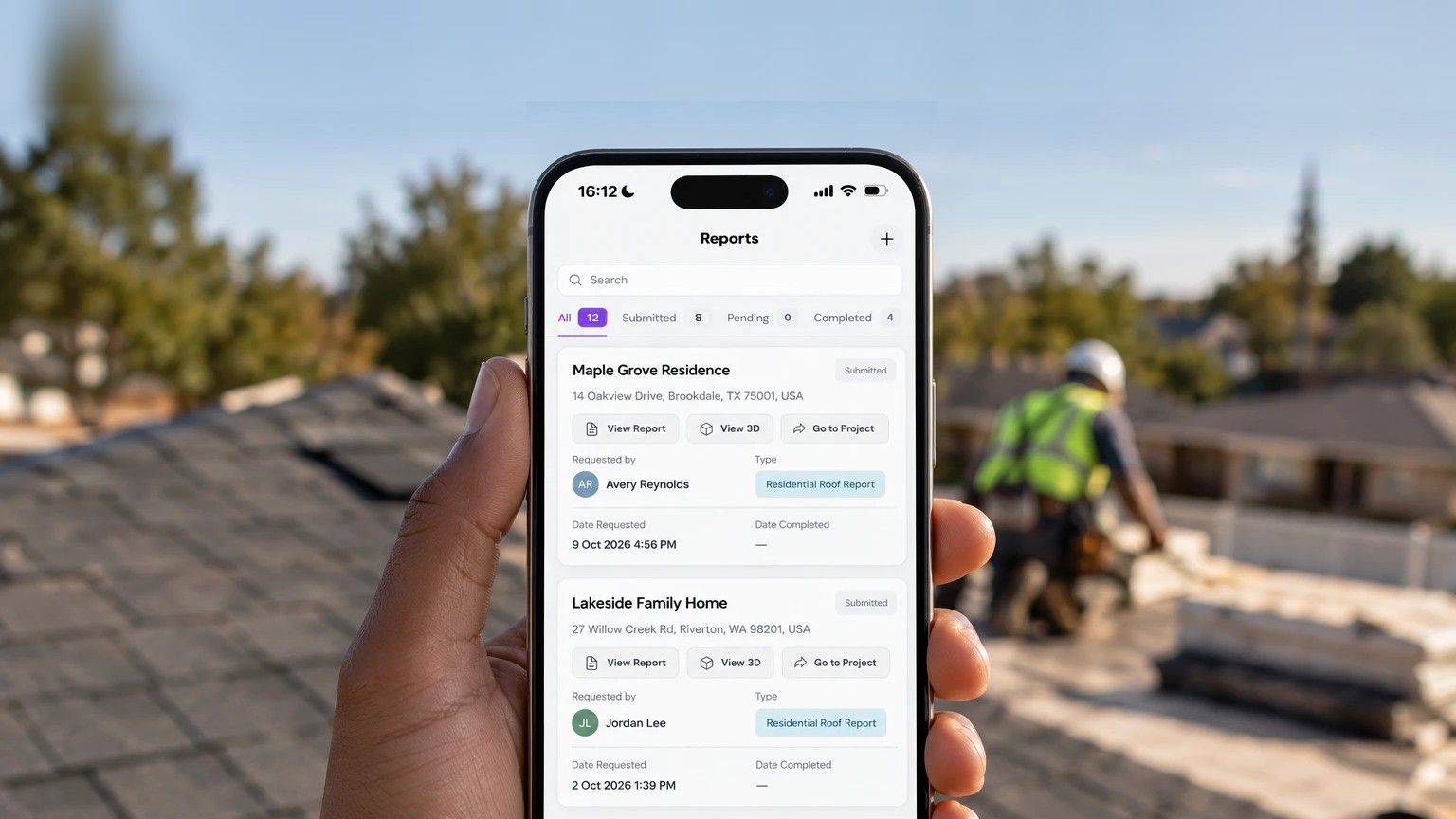
The feature everyone used was the hardest to reach.
When I joined Aether in 2025, it was an AI sales platform for roofing and solar contractors. The web app could do almost anything, but it was hard to find your way around: the main menu used icons with no names, simple tasks took several clicks, and contractors often didn’t know what to do next.
Measurements were one of the features roofers used most. But they lived in a desktop product, and roofers spend their day on site with only a phone. Support heard about it every day.
Solve one problem really well.
Leadership asked a simple question: could we make a version of Aether that does one thing really well? So instead of a full mobile app, we brought only measurements to the phone and called it Aether Lite, later Aether Measurements.
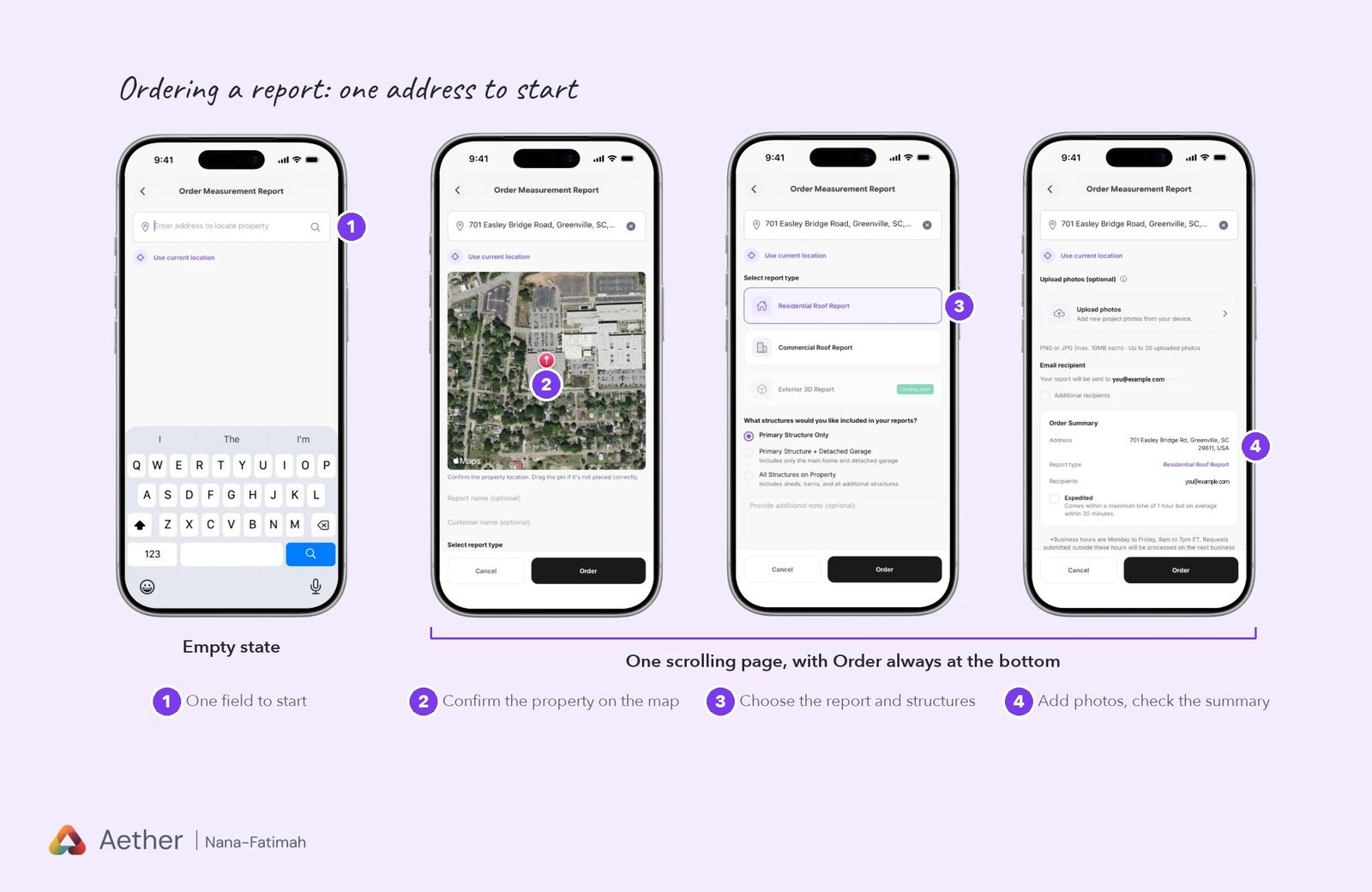
Underneath sat two years of ML and CAD work. My job was to get all of it out of the way. Lite charges per report, from $20, so every extra step stood between a roofer and an order.
I remember thinking: this is going to be harder than it sounds.
A roofer with five minutes.
Lite is for roofers only: someone between a site visit and the next call, who needs a roof measurement to quote a job. They came for a measurement and want to leave with one. That set the rules:
- Make the main action obvious, and cut the rest.
- Use words roofers already use, like eaves, rakes, ridges and pitch.
- Don’t make anyone learn something new to get started.
What shaped the design.
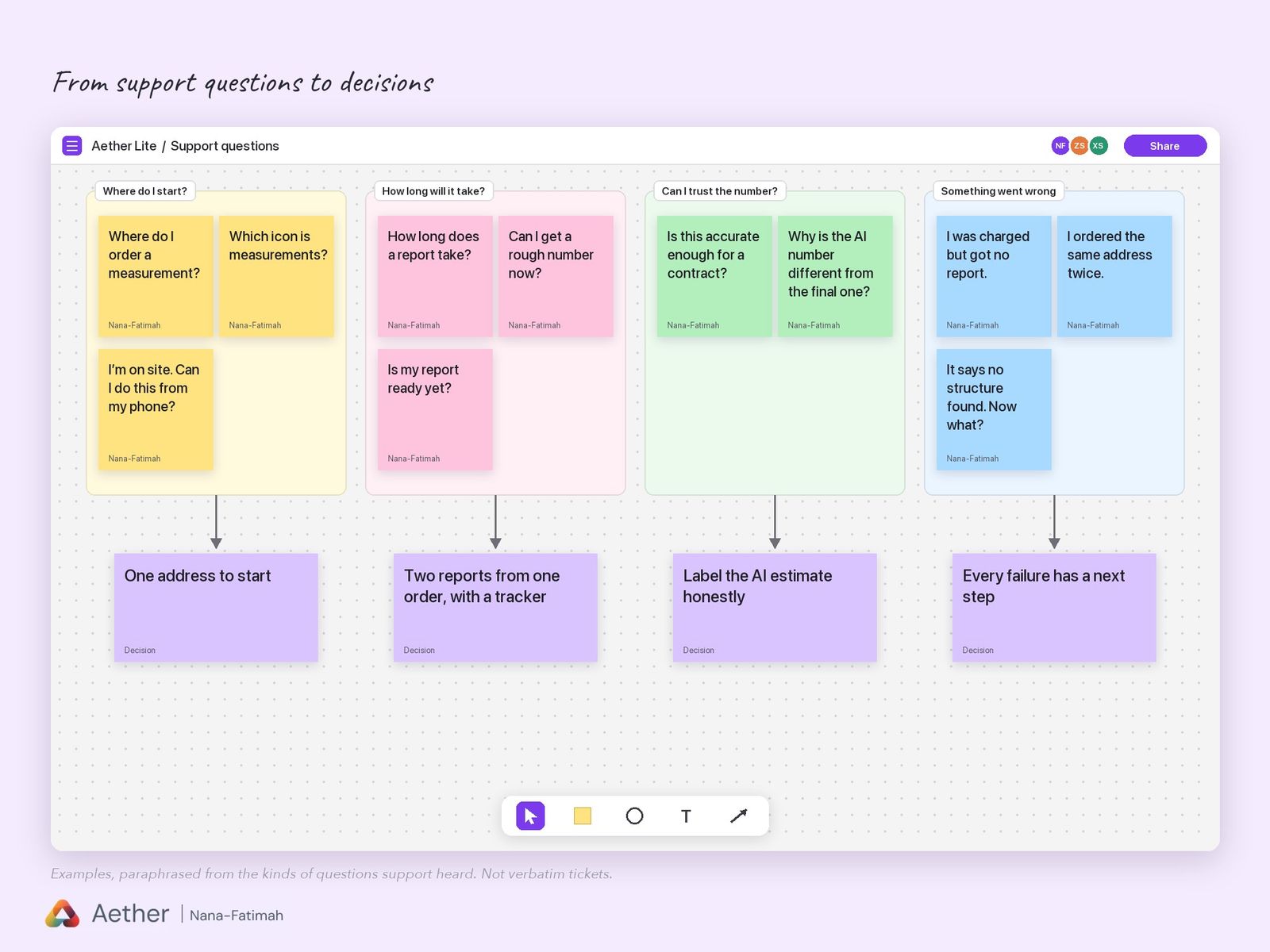
- Support questions showed where roofers got stuck.
- Our ML engineer, Xiaotong Sui, and I worked out what the AI could produce instantly and what still needed a specialist. That split became the heart of the product.
- Feedback after launch shaped the second version. Every request faced one test: does it keep Lite simple?
Version one: a summary, then nothing to use.
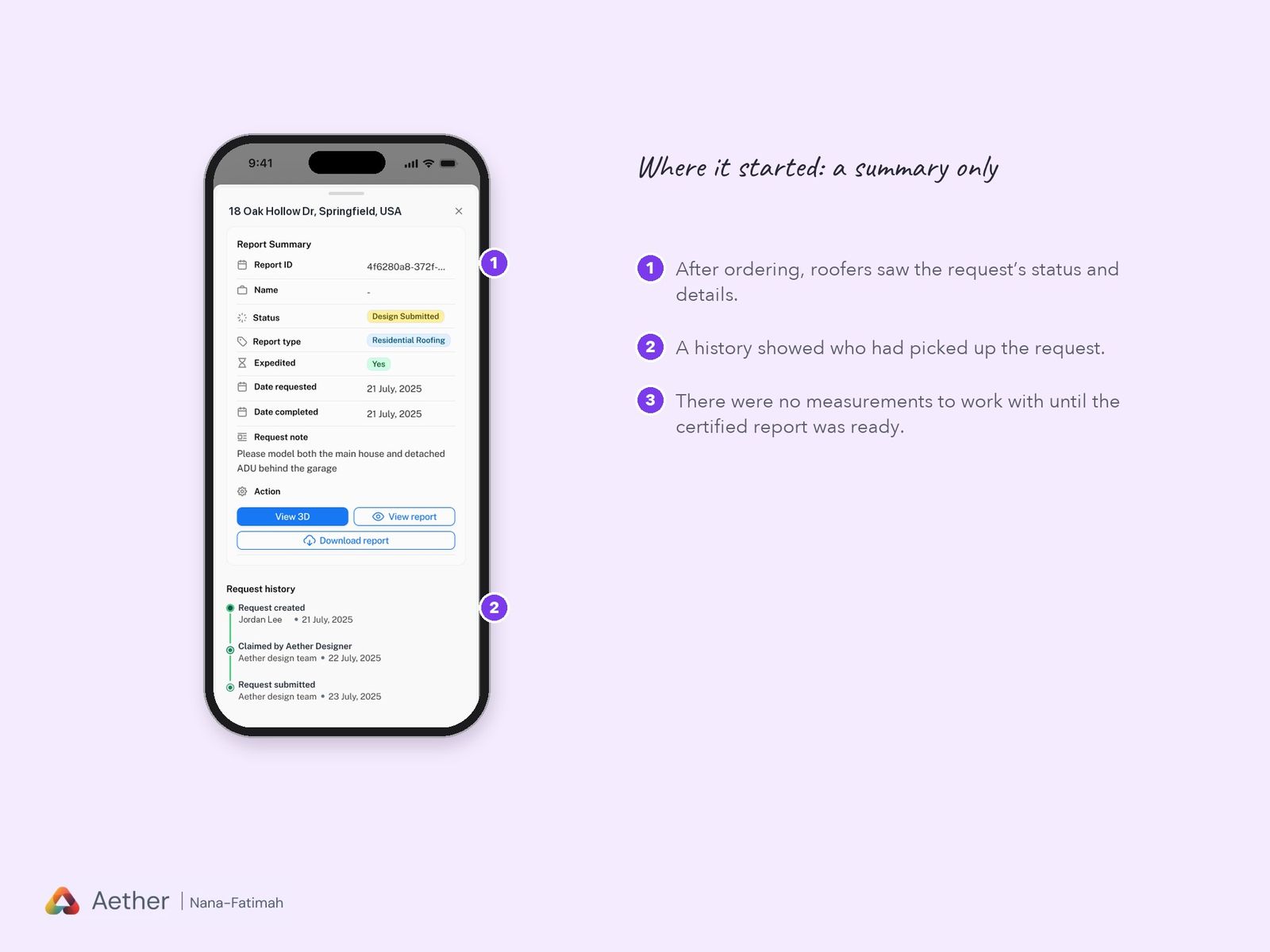
After a roofer paid, my first report page showed a summary of the order: its status, dates, any note they’d added and who had picked it up. The measurements only came with the certified report, which an Aether specialist has to review first.
Feedback told us that didn’t work. Roofers order while they’re on site, and they need a number straight away, to start pricing or talk to the homeowner. So the second version was built around that.
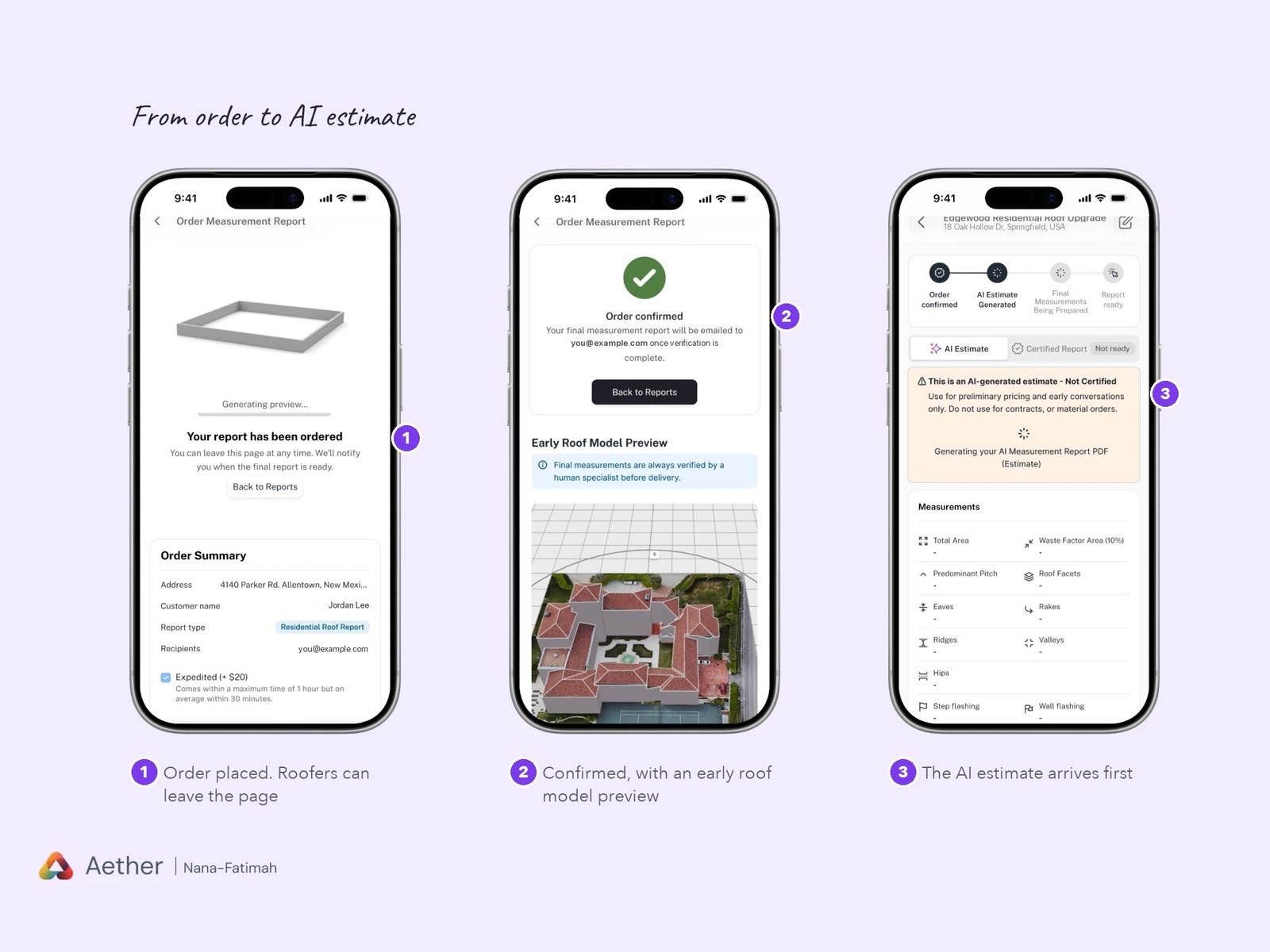
Something useful in 30 seconds.
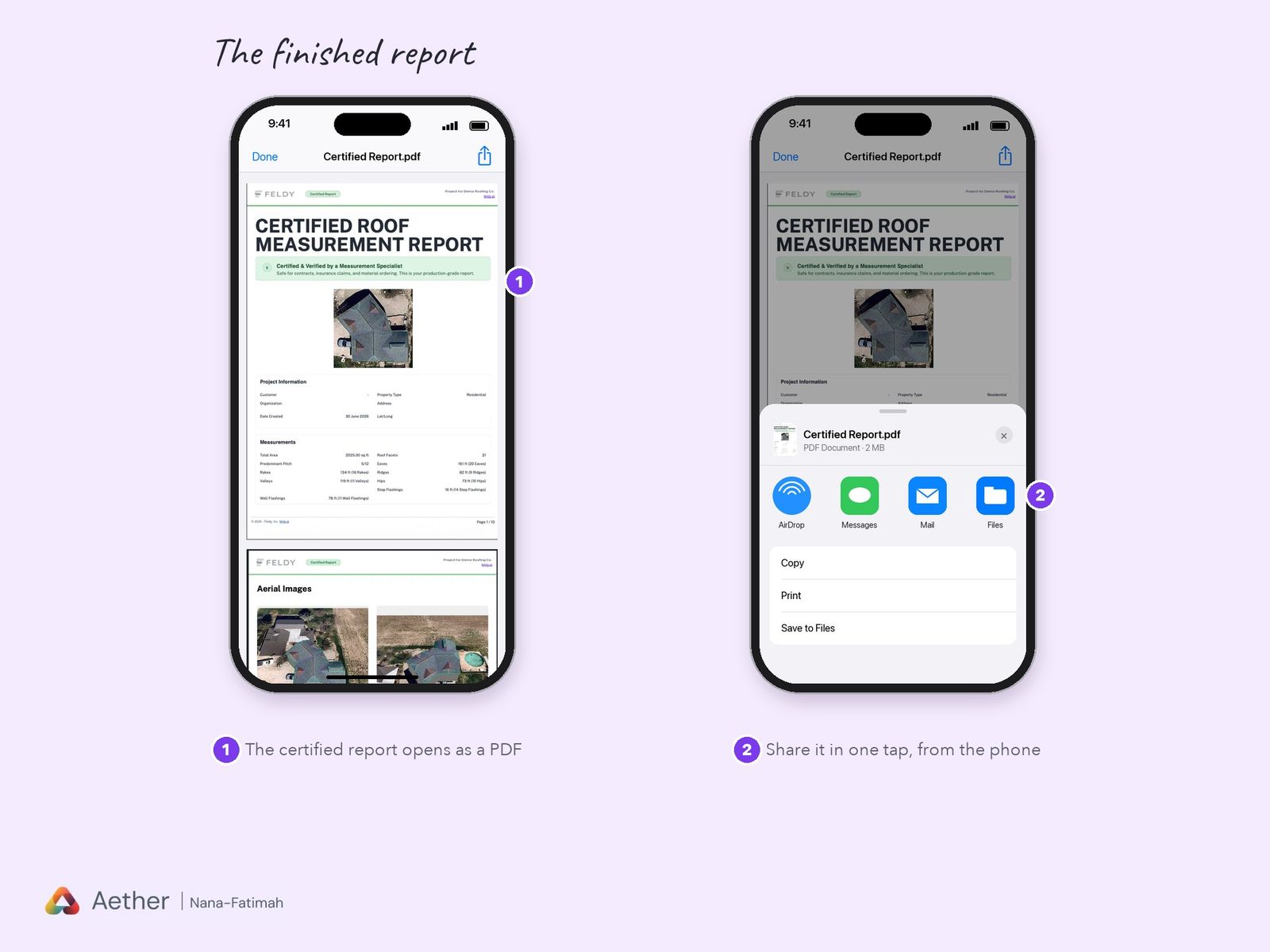
Now every order produces two reports. The AI estimate arrives in about 30 seconds, for early pricing and conversations. The certified report follows once a specialist has checked it, for contracts and material orders. A progress tracker shows where it is, and roofers can leave the page while they wait.
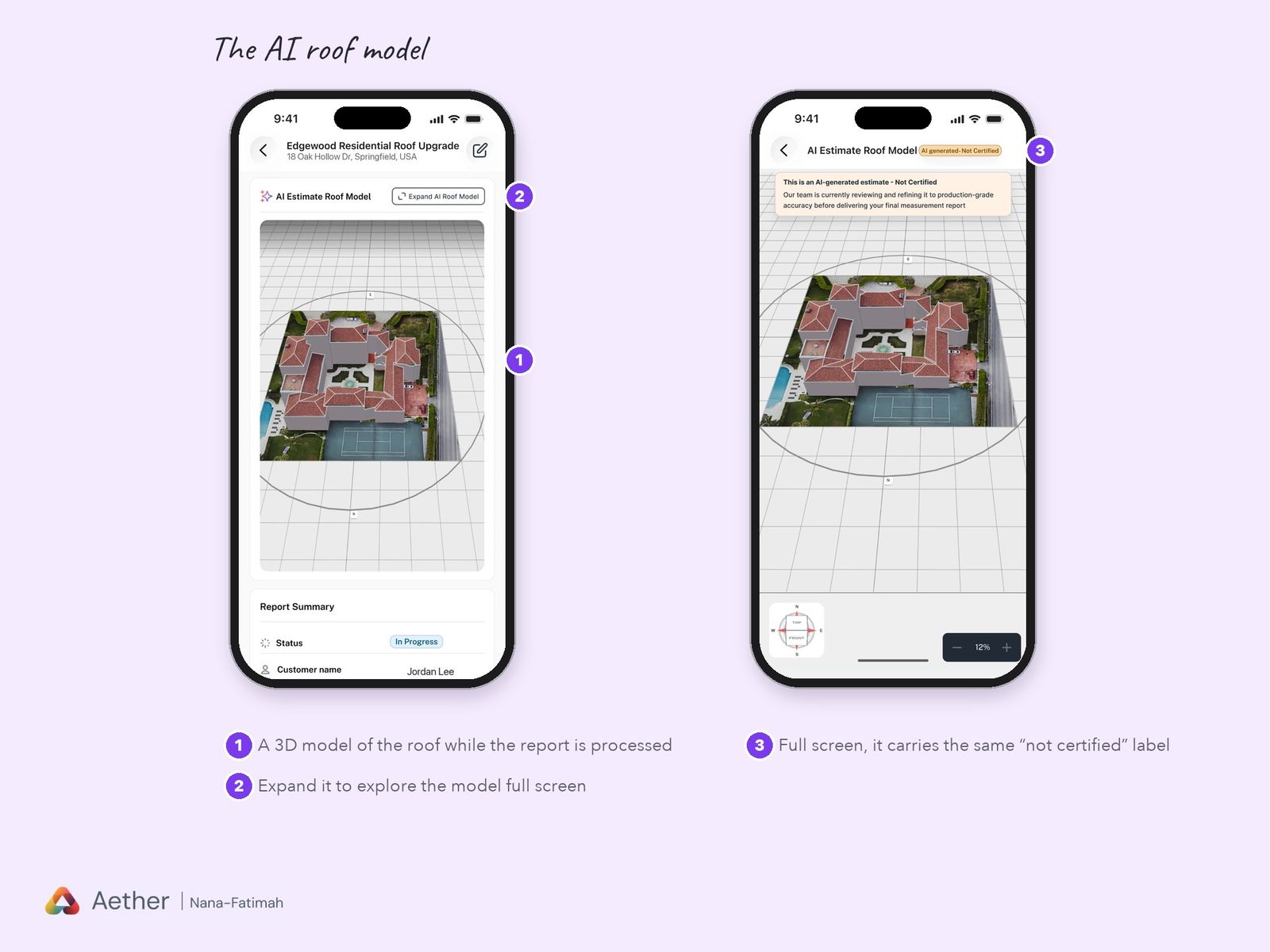
See the roof before the numbers.
Each order also gets an AI-generated 3D model of the roof, right on the report page. Roofers can check it’s the right building, and use it with a homeowner, before any measurements are certified. Expanded to full screen, it carries the same “not certified” label as the AI estimate.
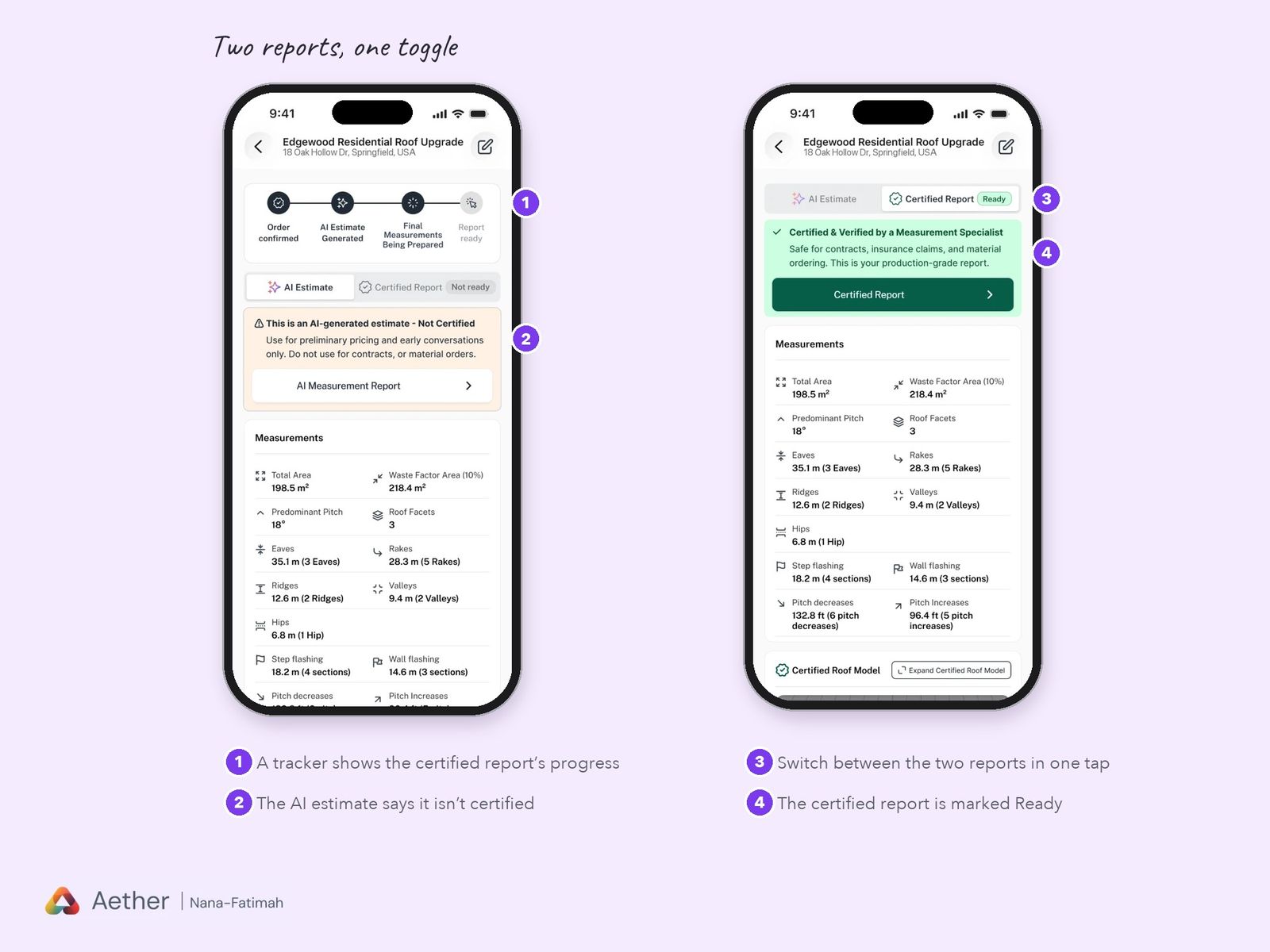
One toggle, and an honest label.
Roofers switch between the AI estimate and the certified report with one toggle. The AI estimate has an amber banner: use it for early pricing, not for contracts or material orders. When the certified report is ready, it’s marked Ready with a green banner.
The label had to be impossible to miss. A roofer who puts a wrong estimate into a contract won’t come back, so the warning sits right where they read the numbers.
Every failure has a next step.
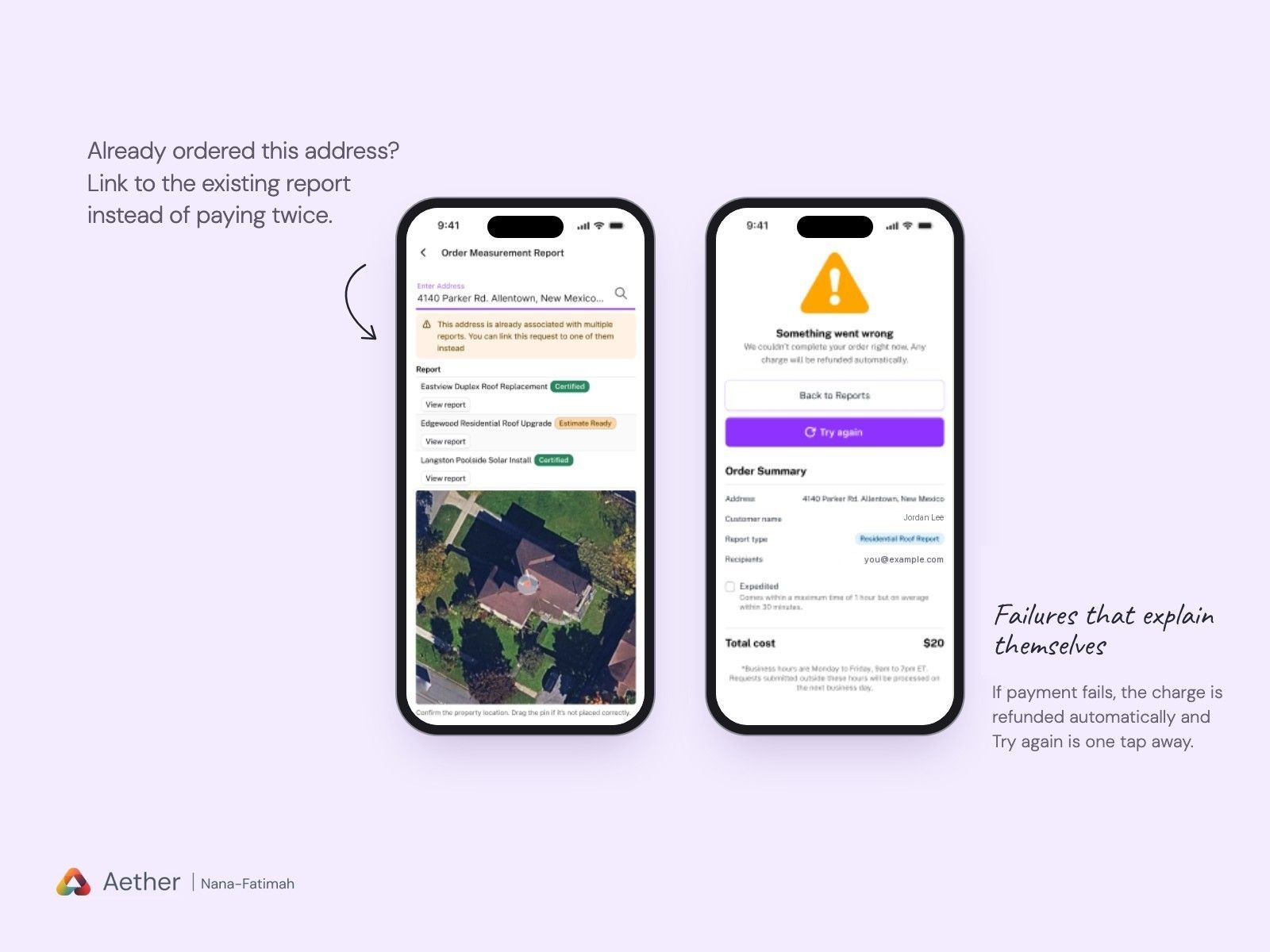
- Payment fails: the charge is refunded automatically, and Try again is one tap away.
- Address already ordered: roofers can link to the existing report instead of paying twice.
- No building found: the certified report explains why it was rejected.
Lite became a business.
As of 7 April 2026:
| Active roofers | Close to 20 |
| Revenue | $5k in a single week |
| Orders | 20 a day, 25% of one week’s orders commercial |
| Contracts | Some customers asked to switch from pay as you go to monthly |
Roofers used Lite and came back without asking where to start. These results also came from two years of ML and CAD work and our CEO’s sales effort, so I count them as what happened after launch, not the design alone. The message I remember most came in almost in passing: “This is so much easier.”
Restraint is a skill.
The hardest part wasn’t the design. It was the pull to add more, and the worry that simple would feel unfinished. Lite taught me that restraint is a skill, and that building alongside developers shapes a product more than any static spec. Now that roofers are sending good feature requests, the job is keeping it simple.
Simple is the result of a thousand small choices to leave something out.